1. Choose the recipient and the moment
Write one sentence: “This is for ___ because ___.” The answer might be a father retiring, grandparents reaching an anniversary, a couple getting married, or a family gathering after years apart.
This decision controls tone. A retirement gift may recognize contribution; a wedding gift looks forward; a memorial holds remembrance and hope; a reunion piece belongs to a group. Do not combine every family occasion into one project.
2. Gather a small evidence set
Collect only material that helps the recipient recognize themselves:
- Names and preferred forms of address.
- One personal memory with a place, action, or detail.
- Two or three values shown through behavior.
- A saying, recipe, tradition, object, or family habit.
- One place connected to home, work, migration, or gathering.
- Photographs with known people, dates, and context.
- The occasion and the message you want the recipient to carry away.

3. Turn broad praise into a scene
“She was kind” is a conclusion. “She always set another place at the table without asking who was coming” gives the reader a scene. Look for actions, repeated habits, and small decisions.
If relatives remember an event differently, do not force certainty. Attribute the memory, use neutral wording, or leave it out. A keepsake should interpret what the family knows, not create missing history.
4. Choose a format with one clear job
A frameable certificate recognizes the occasion. A storybook carries emotion. An illustrated guide explains artwork. A photo book organizes images. An audio interview preserves voice. A memory box holds physical objects.
Avoid asking one item to do everything. When several pieces are included, give each a distinct role and a clear reading order.
5. Write for recognition, not grandeur
Use the words family members would naturally understand. Remove inflated claims, generic motivational phrases, and descriptions that could belong to anyone. Read the text aloud; if it sounds like an award citation instead of a person, simplify it.
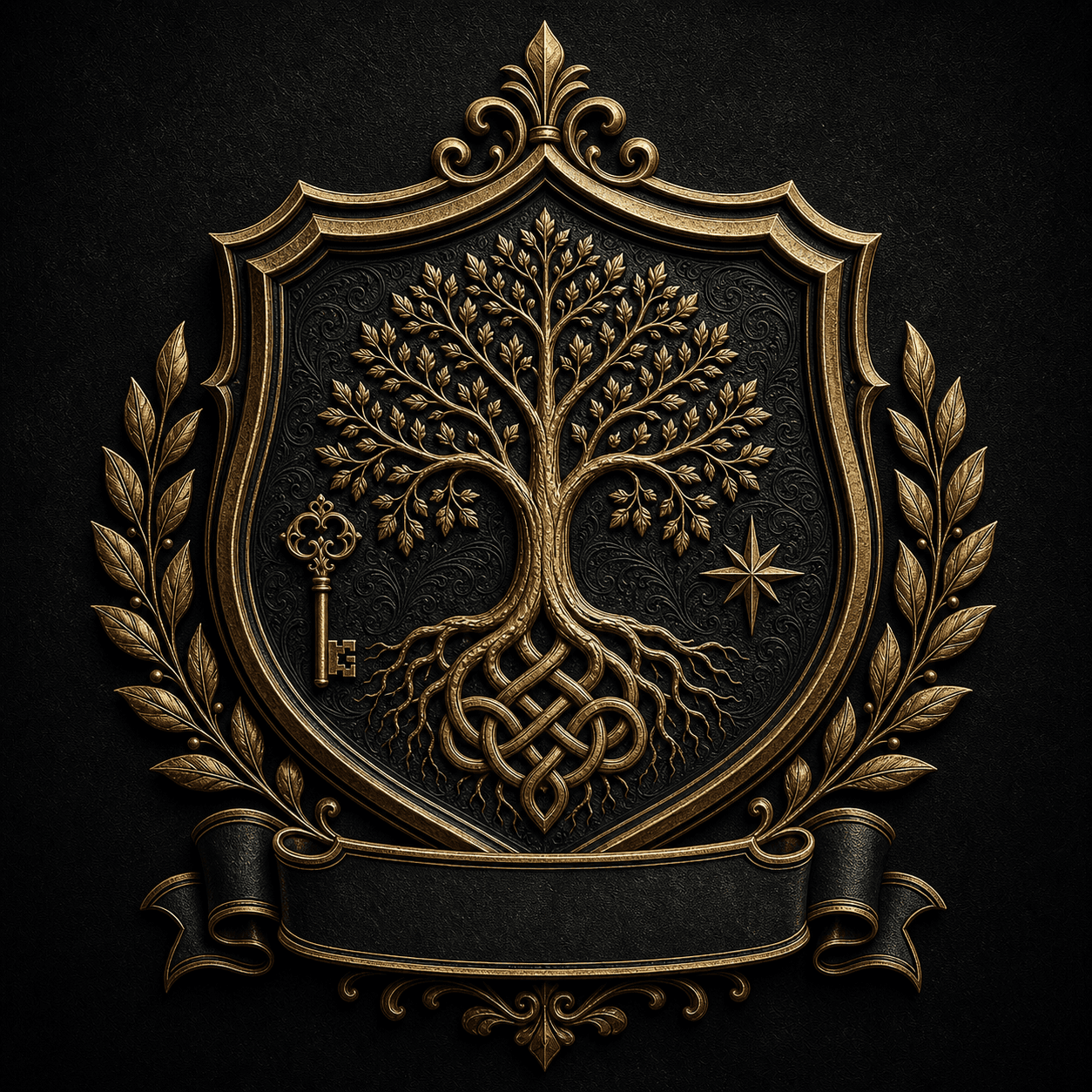
Symbols should follow the same rule. A tree, lantern, compass, shield, book, or mountain belongs only when the evidence supports its meaning. For the distinction between symbolic artwork and official heraldry, read What Is a Family Crest?.
6. Set privacy boundaries before collecting
Tell contributors what you are making and who will see it. Exclude personal data that does not serve the gift. Ask permission before using sensitive stories or photographs supplied by someone else.
Keep the working material in a controlled location and delete duplicate exports you no longer need. A finished family keepsake does not require public posting.
7. Preserve the originals and the finished files
The U.S. National Archives recommends cool, dry storage for family papers and photographs, suitable containers, and avoiding damaging glues, tapes, rubber bands, and unstable plastics. It also recommends keeping originals after digitization because digital copies have their own risks.
For digital files, the Library of Congress advises identifying what to save, organizing it, keeping copies on at least two storage media in separate locations, and migrating copies as storage technology changes. Use clear file names and include a plain-text note describing the contents.
8. Run a family review before presenting it
Use this final check:
- Are names, dates, relationships, and the occasion correct?
- Does every important statement come from supplied evidence?
- Could any paragraph apply unchanged to a different family?
- Are private details included only with permission?
- Does each item have a clear purpose?
- Can the recipient easily open, read, print, or store it?
A guided way to turn the evidence into a finished gift
MyKinLegacy's guided interview asks for a recipient, occasion, memories, values, and visual preferences, then turns that material into a final crest, certificate, family story, and explanation. It is a symbolic keepsake service, not genealogy research or official heraldry.
You can also browse real examples or compare other formats in Family Legacy Gift Ideas.
Buyer questions
Frequently asked questions
How much information do I need to make a family keepsake?
Start with one recipient, one occasion, one specific memory, and two or three lived values. Add names, photographs, sayings, or places only when they improve recognition.
Should I include every family story?
No. Select material that serves the gift, can be supported, and is appropriate to share. A focused keepsake is usually stronger than an unedited archive.
How should I back up a digital family keepsake?
Keep organized copies on at least two storage media and in separate locations. Use descriptive file names, retain source context, and review the copies as technology changes.
Sources
References used for factual guidance
- How to Preserve Family Archives — U.S. National Archives
- Digitizing Family Papers and Photographs — U.S. National Archives
- Digital Preservation and Personal Archiving — Library of Congress