That is why many personalized anniversary gifts for parents still feel incomplete. Names, a wedding date, and the number of years are accurate, but they do not explain what the marriage made possible.
A more meaningful gift begins with evidence. What place holds their story? What did each parent bring to the relationship? What do their children remember? Which values became visible through years of family life? Once those details are clear, you can choose a practical gift, an experience, a photo keepsake, or a family legacy collection with confidence.
Why anniversary gifts for parents become generic
Adult children often know their parents too well and not well enough at the same time. You may remember family life in detail, yet know little about the early years of the relationship. Siblings may remember different versions of the same period. One parent may enjoy sentimental gifts while the other prefers useful objects. And many couples who have spent decades together genuinely do not need more things.
This creates three common shortcuts:
- buying for the milestone material rather than the people;
- personalizing with names and dates only;
- choosing a gift that suits one parent and adding both names to it.
None of these choices is automatically wrong. A silver frame can be lovely for a 25th anniversary, and a practical household item may be exactly what the couple wants. The problem appears when the gift could belong to any couple celebrating the same number of years.
The solution is not necessarily a more expensive object. It is a better definition of what the gift should recognize.
Begin with what they built together
Complete this sentence before comparing products:
“Because of their life together, our family has ______.”
Possible answers include:
- a place where everyone knows they can return;
- a tradition that gathers several generations;
- an example of loyalty during difficult years;
- humor that made ordinary life lighter;
- a business, garden, home, or craft built with patience;
- an approach to faith, service, hospitality, or education;
- a story of migration, starting over, or caring for relatives;
- children and grandchildren who understand a particular set of values.
This is the center of the gift. The anniversary date provides the occasion, but the shared contribution provides the meaning.
Then identify each parent’s role without reducing them to stereotypes. One may have brought steadiness while the other brought warmth; one may have managed uncertainty while the other kept traditions alive. Those roles should come from real observation, not assumptions about gender, work, or household duties.
Gather evidence from the family
You do not need a formal family history. You need a small set of reliable, recognizable details.
Ask siblings or close relatives for:
- one memory that includes both parents;
- one place associated with their life together;
- one quality each parent contributed;
- one family tradition they established or sustained;
- one sentence about what their relationship gave the family.
Keep the request narrow. A shared document full of unedited tributes can become repetitive and difficult to use. One person should combine similar memories, check names and dates, and ask follow-up questions when an account is unclear.
Look for concrete details. “They always supported us” is sincere but broad. “They drove six hours for every school concert, even during the busiest years at the store” gives a writer or designer something real to work with.
If your parents are private, avoid turning the gift into a public biography. A meaningful anniversary keepsake can focus on values and family impact without exposing hardship, health information, finances, or conflict.
Choose among four gift directions
The best personalized anniversary gift is the format that matches how your parents like to receive meaning.
1. Practical gifts with a private layer
Choose this route for parents who value usefulness. A quality blanket, serving piece, garden object, or travel accessory can carry a discreet inscription, handwritten note, or small booklet of family memories.
The personal layer should explain the choice. A serving board becomes more than a monogrammed object when the note recalls the table where the family gathered for Sunday meals.
2. Experience gifts with a record
A dinner, trip, concert, family gathering, or return to a meaningful place can honor the relationship through time together. Add a lasting record: a printed itinerary with memories, a letter from the children, an edited set of photographs, or an audio message.
Experiences are strongest when they suit the couple’s energy, mobility, schedule, and preferences. Do not force a surprise trip on parents who would prefer a quiet meal with family.
3. Photograph and memory gifts
A restored wedding photograph, curated album, short film, or framed sequence can show change across years. Captions matter. Label people, dates, and places where known, and mark uncertainty rather than guessing.
If you digitize originals, keep the originals and maintain backups. The U.S. National Archives advises that digital copies have their own preservation risks and should not be treated as replacements for original photographs and papers.[1]
4. Family legacy gifts
A family legacy gift is useful when the goal is to interpret what the couple built, not only collect photographs. It can combine a symbolic artwork, certificate, story, and explanation into one coordinated anniversary keepsake.
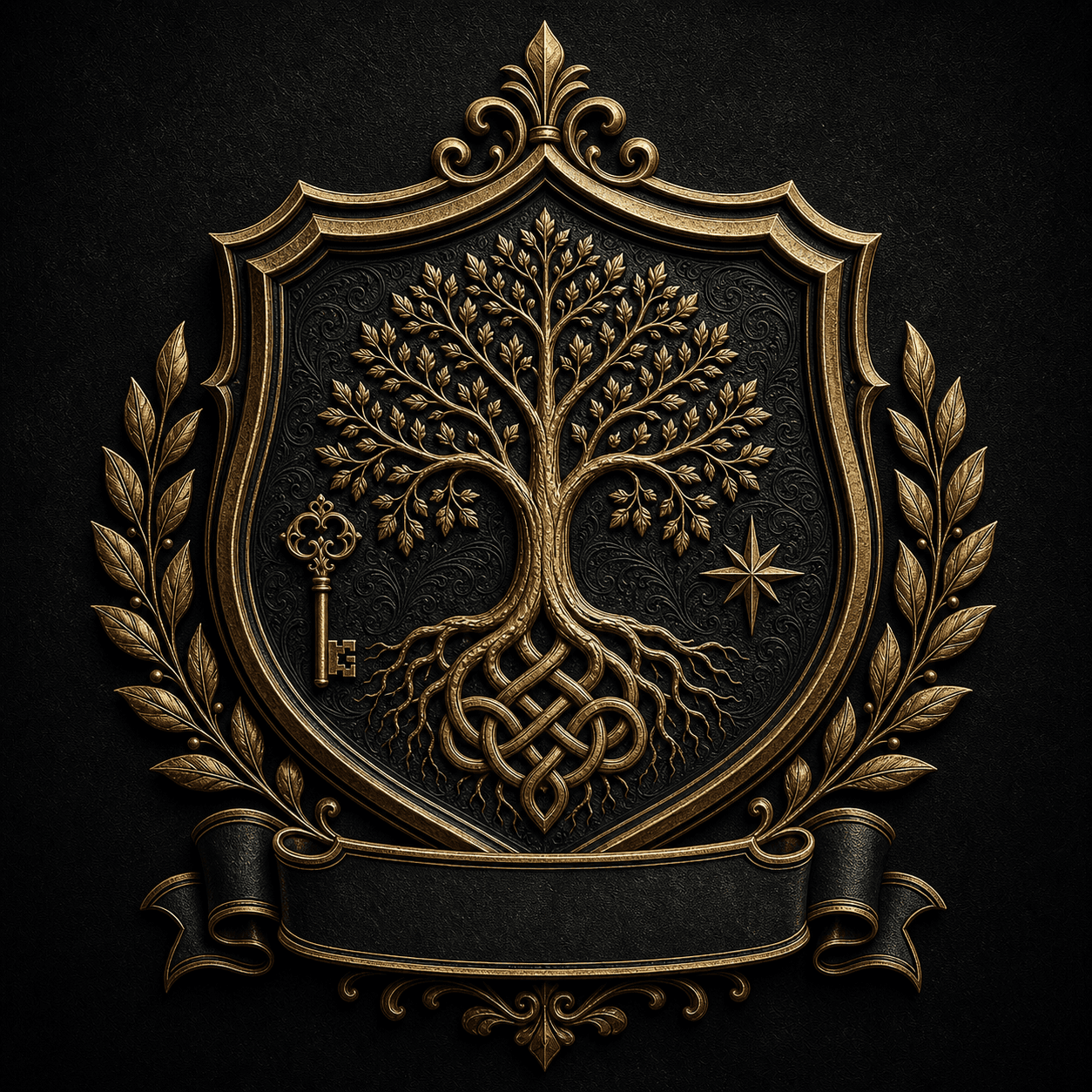
In a MyKinLegacy collection, supplied memories and values guide one Final Crest. One Heritage Certificate marks the occasion. One Family Story centers lived experience. One Meaning Behind Your Crest guide explains the Design Basis and Symbol Rationale. The collection is delivered digitally with one Complete Collection archive. The artwork is contemporary and personal; it does not claim inherited arms, ancestry, or social status.
This direction is especially appropriate for parents who say they “do not need anything,” because the gift recognizes meaning rather than adding another general household object.
Use anniversary traditions without becoming trapped by them
Traditional material lists can provide a useful prompt, but they are not requirements. Sources and regions differ. For example, widely cited United States and United Kingdom lists do not assign every early anniversary material in the same way, while silver at 25 years and gold at 50 years are more consistent milestones.[2]
Historical reporting also shows that silver and gold anniversary customs developed before exhaustive year-by-year lists became common.[3] Treat the material as an optional layer, not a test of whether the gift is appropriate.
For a 25th anniversary, silver might appear as a frame, foil detail, or color accent. For a 40th, ruby can inspire a small color note. For a 50th, gold can shape presentation without forcing the entire gift into a metallic theme.
Ask three questions:
- Does the tradition matter to my parents?
- Does the material support the story or distract from it?
- Can I use it as an accent rather than the whole idea?
If the answer to the first question is no, choose meaning over convention.
Build a gift for both parents
A joint anniversary gift should make both people visible. Use these checks:
Balance the evidence
Do not build the entire gift around one parent’s career while describing the other only as supportive. Include contributions from both, even when those contributions took different forms.
Use couple-centered language
Write about “the home they created,” “the way they met change together,” or “what their partnership gave the family.” Avoid assigning fixed roles unless the family supplied them.
Name the recipients the way they prefer
Do not assume a shared surname. Confirm full names, display order, honorifics, and whether the couple prefers first names, family name, or a phrase such as “Mom and Dad.”
Choose one emotional center
A gift cannot equally emphasize every decade, child, move, hardship, and achievement. Choose one center—steadiness, hospitality, shared courage, humor, or family continuity—and let other details support it.
Let the anniversary close the story, not dominate it
The number of years is important, but it should not replace the lived reason the years matter.
A story-to-symbol example
Imagine adult children provide these details:
- their parents moved three times while building a small family business;
- one parent was known for keeping promises, the other for welcoming people;
- Sunday dinner remained constant;
- the children choose integrity, hospitality, and endurance as the clearest values;
- the gift is for a 40th anniversary.
The Design Basis might identify the shared home as the emotional center. A shield could lead if protection and keeping promises dominate. An open branch or doorway could support welcome. Roots could represent continuity through several moves, but they should not imply the family never changed location. A restrained ruby color accent could acknowledge the 40th anniversary without overwhelming the black-and-gold composition.
The Family Story would focus on movement, work, and the dinner table. The certificate would present the collection to both parents and mark the anniversary. The Symbol Rationale would explain why the shield leads and why the supporting details remain secondary.
This reasoning prevents the design from becoming a collection of attractive but unrelated symbols.
Presentation and preservation
Think about how your parents will encounter the gift.
- For a family dinner, present one printed centerpiece and let the couple read longer material later.
- For parents who live far away, send the digital collection privately and arrange a video call for the opening.
- For a surprise party, avoid projecting private story text without permission.
- If siblings contributed, include a short contributor note rather than placing every message inside the main narrative.
For printed photographs or certificates, use suitable framing materials and avoid prolonged direct light. National Archives guidance notes that display copies can protect originals from light exposure and recommends appropriate matting and glazing choices.[4]
For digital files, use descriptive names, maintain multiple copies, and give one other family member responsibility for the archive. Preservation is an ongoing practice, not something guaranteed by a single download.
What to avoid
A gift that belongs to one parent
If the object, story, or experience clearly suits only one person, give it separately rather than labeling it a joint anniversary gift.
Unverified family history
Do not turn a surname, online tree, or family rumor into a factual claim. If heritage matters, distinguish documented facts, family recollections, and symbolic interpretation.
Overloaded personalization
Names, dates, every child’s name, a long quote, map coordinates, wedding song, and multiple photographs can compete. Select the few details that carry the shared story.
Public sentiment without consent
Some parents will treasure a private letter and dislike a public speech. Match the presentation to them, not to social-media expectations.
Generic praise
“An amazing couple” says less than a true detail. Replace superlatives with evidence.
Celebrate what the years created
The best anniversary gift for parents does not need to summarize an entire marriage. It needs to recognize one true part of the life they built together.
You can turn your parents’ shared history into a symbolic family artwork and keepsake collection, explore the 50th anniversary example, compare the anniversary gift experience, or review broader family legacy gift ideas.
Buyer questions
Frequently asked questions
What is a meaningful anniversary gift for parents?
It is a gift that recognizes both parents and something their shared life created: a family tradition, a home, an example, a body of memories, or values their children carry forward.
What can adult children give parents who have everything?
Consider a recorded family interview, curated photograph archive, experience with a written record, family letter, or symbolic legacy collection. These gifts organize meaning rather than add another general possession.
Can siblings give one personalized anniversary gift together?
Yes. Agree on one emotional center, ask each sibling for one specific memory, and appoint one editor. A coordinated gift usually feels stronger than several unrelated tributes.
Should a 25th, 40th, or 50th anniversary gift follow the traditional material?
Only if the convention matters to the recipients. Lists vary by place and source. Silver, ruby, or gold can be used as an accent while the couple’s actual story remains central.
What is a good anniversary gift from adult children?
Choose something that adult children can uniquely provide: a view of what their parents’ relationship gave the family. A spouse can celebrate private partnership; children can recognize the home, examples, and continuity built around them.
How do I personalize a gift without using only names and dates?
Add a specific place, memory, lived value, family ritual, or contribution. Explain why that detail belongs to the couple.
Is a digital anniversary collection appropriate?
Yes, when the delivery format is clear. Printable artwork and PDFs can give the couple immediate access and allow relatives to keep copies. If they prefer a physical opening, pair the digital collection with one professionally printed or framed piece.
How early should I order or begin?
Allow time to collect memories, verify names and dates, review the result, and arrange printing if desired. The evidence and review stages often require more coordination than the final presentation.
Sources
References used for factual guidance
- Why Are There Special Gifts for Each Anniversary Year? — TIME
- Anniversary and Birthday Traditions Around the World — Timeanddate.com
- Digitizing Family Papers and Photographs — U.S. National Archives
- Displaying Family Papers and Photographs — U.S. National Archives